1 option
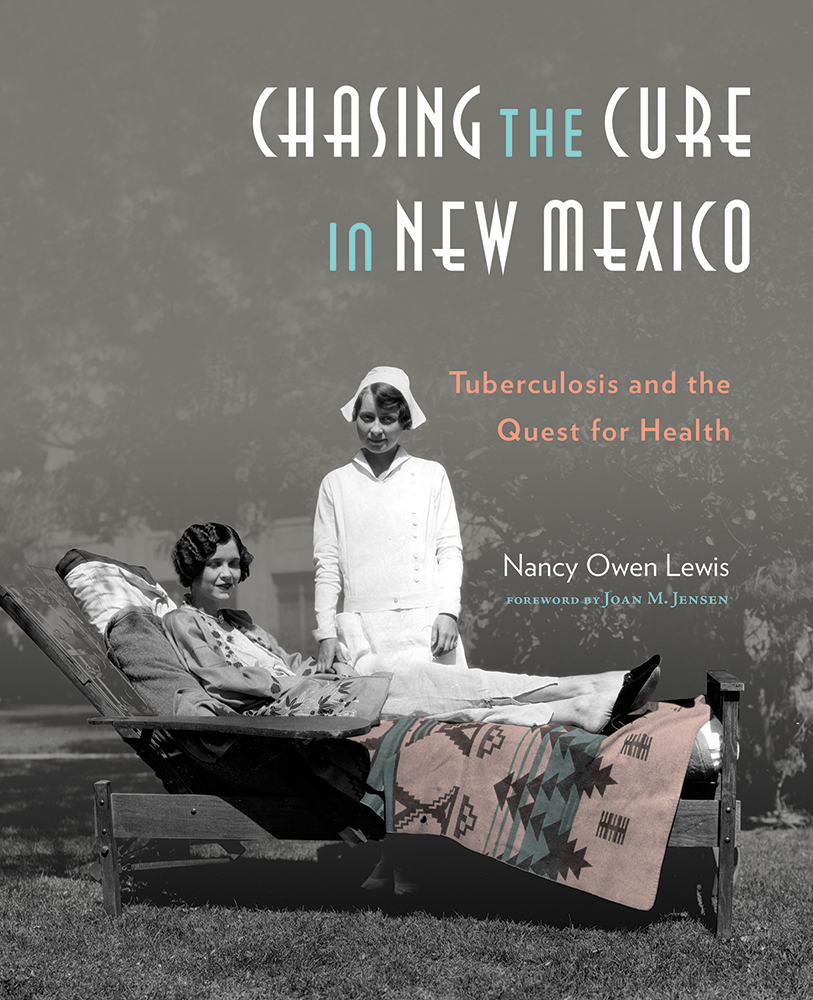
Chasing the cure in New Mexico : tuberculosis and the quest for health / Nancy Owen Lewis ; foreword by Joan M. Jensen.
- Format:
- Book
- Author/Creator:
- Lewis, Nancy Owen, author.
- Language:
- English
- Subjects (All):
- Tuberculosis--Treatment--New Mexico.
- Tuberculosis.
- Climatology.
- Tuberculosis--Treatment.
- New Mexico--Climate.
- New Mexico.
- Medical Subjects:
- Tuberculosis.
- Physical Description:
- xx, 315 pages : illustrations ; 26 cm
- Place of Publication:
- Santa Fe : Museum of New Mexico Press, [2016]
- Summary:
- "This book tells the story of the thousands of "health seekers" who journeyed to New Mexico from 1870 to 1940 seeking a cure for tuberculosis (TB), the leading killer in the United States at the time. By 1920 such health seekers represented an estimated 10 percent of New Mexico's population. The influx of "lungers" as they were called--many of whom remained in New Mexico--would play a critical role in New Mexico's struggle for statehood and in its growth. Nearly sixty sanatoriums were established around the state, laying the groundwork for the state's current health-care system. Among New Mexico's prominent lungers were artists Will Shuster and Carlos Vierra, who "came to heal and stayed to paint." Bronson Cutting, brought to Santa Fe on a stretcher in 1910, became the influential publisher of the Santa Fe New Mexican and a powerful U.S Senator. Others included William R. Lovelace and Edgar T. Lassetter, founders of the Lovelace Clinic, as well as Senator Clinton P. Anderson, poet Alice Corbin Henderson, architect John Gaw Meem, aviator Katherine Stinson, and Dorothy McKibben, gatekeeper for the Manhattan Project. New Mexico's most infamous outlaw, Billy the Kid, first arrived in New Mexico when his mother, Catherine Antrim, sought treatment in Silver City"-- Provided by publisher.
- "In this book, Nancy Owen Lewis explores a fascinating era in New Mexico history. She tells the story of the thousands of health seekers who journeyed to New Mexico during 1870 to 1940 seeking a cure for tuberculosis (TB), which was once the leading cause of death in America. Although the tubercle bacillus had been isolated in 1882, the development of streptomycin and other drugs did not occur until the 1940s. During the intervening decades, the medically-approved treatment for TB consisted of nutritious food, fresh air, and rest, preferably in a high, dry, and sunny place. New Mexico--with its high elevation, abundant sunshine, and dry climate--was considered ideal. Officials promoted New Mexico's healthful climate, and the legislature provided tax breaks for construction of sanatoriums throughout the state. "Lungers," as TB victims were called, played a critical role in New Mexico's struggle for statehood and in its growth in the decades that followed. By 1920 health seekers comprised an estimated 10 percent of New Mexico's population. They included doctors, lawyers, writers, artists, and business leaders, many of whom remained in New Mexico and made significant contributions. The movement also spawned an entire industry, which gave a much-needed boost to New Mexico's struggling economy. Nearly sixty sanatoriums were established, laying the groundwork for the state's current health-care system. The health-seeker movement declined sharply during the Great Depression of the 1930s. The number of health seekers dwindled, and sanatoriums closed. By 1940 the era was over. Although this movement has largely faded from public consciousness, its impact was considerable and its legacy endures"-- Provided by publisher.
- Notes:
- Includes bibliographical references and index.
- Other Format:
- Online version: Lewis, Nancy Owen, author. Chasing the cure in New Mexico
- ISBN:
- 9780890136126
- 0890136122
- OCLC:
- 930508684
- Online:
- Cover image
The Penn Libraries is committed to describing library materials using current, accurate, and responsible language. If you discover outdated or inaccurate language, please fill out this feedback form to report it and suggest alternative language.