1 option
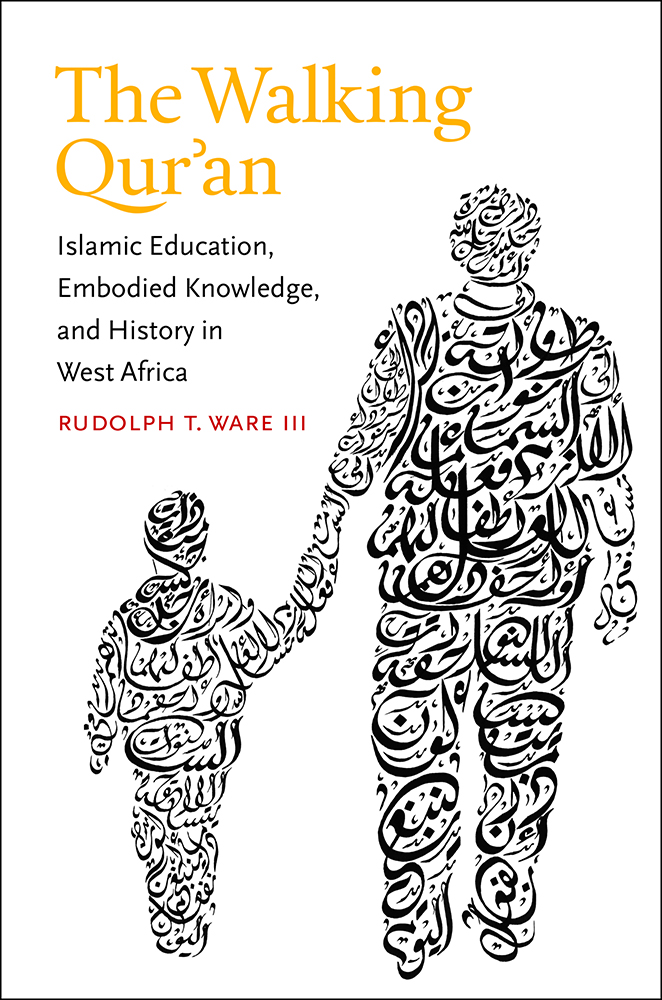
The walking Qurʼan : Islamic education, embodied knowledge, and history in West Africa / Rudolph T. Ware III.
Van Pelt Library BP43.A358 W37 2014
Available
- Format:
- Book
- Author/Creator:
- Ware, Rudolph T., author.
- Series:
- Islamic civilization & Muslim networks
- Islamic civilization and Muslim networks
- Language:
- English
- Subjects (All):
- Qurʼan.
- Islamic religious education--Africa, West.
- Islamic religious education.
- Qurʼan--Study and teaching--Africa, West.
- West Africa.
- Physical Description:
- xvii, 330 pages ; 24 cm.
- Other Title:
- The walking Koran
- Place of Publication:
- Chapel Hill [North Carolina] : The University of North Carolina Press, [2014]
- Summary:
- "Typesetter: code used below Spanning a thousand years of history--and bringing the story to the present through ethnographic fieldwork in Senegal, Gambia, and Mauritania--Rudolph Ware documents the profound significance of Quran schools for West African Muslim communities. Such schools peacefully brought Islam to much of the region, becoming striking symbols of Muslim identity. Ware shows how in Senegambia the schools became powerful channels for African resistance during the eras of the slave trade and colonization. While illuminating the past, Ware also makes signal contributions to understanding contemporary Islam by demonstrating how the schools' epistemology of embodiment gives expression to classical Islamic frameworks of learning and knowledge. Today, many Muslims and non-Muslims find West African methods of Quran schooling puzzling and controversial. In fascinating detail, Ware introduces these practices from the viewpoint of the practitioners, explicating their emphasis on educating the whole human being as if to remake it as a living replica of the Quran. From this perspective, the transference of knowledge in core texts and rituals is literally embodied in people, helping shape them--like the Prophet of Islam--into vital bearers of the word of God. "-- Provided by publisher.
- "Spanning a thousand years of history--and bringing the story to the present through ethnographic fieldwork in Senegal, Gambia, and Mauritania--Ware documents the profound significance of Qurʼan schools for West African Muslim communities. Such schools peacefully brought Islam to much of the region, becoming striking symbols of Muslim identity. Ware shows how in Senegambia the schools became powerful channels for African resistance during the eras of the slave trade and colonization. While illuminating the past, Ware also makes signal contributions to understanding contemporary Islam by demonstrating how the schools' epistemology of embodiment gives expression to classical Islamic frameworks of learning and knowledge"-- Provided by publisher.
- Contents:
- Chapter 1 Education, Embodiment, and Epistemology 39
- Chapter 2 Embodying Islam in West Africa: The Making of a Clerisy, ca. 1000-1770 77
- Chapter 3 The Book in Chains: Slavery and Revolution in Senegambia, 1770-1890 110
- Chapter 4 Bodies of Knowledge: Schooling, Sufism, and Social Change in Colonial Senegal, 1890-1945 163
- Chapter 5 Disembodied Knowledge?: "Reform" and Epistemology in Senegal, 1945-Present 203.
- Notes:
- Includes bibliographical references and index.
- ISBN:
- 9781469614311
- 1469614316
- OCLC:
- 867851681
- Online:
- Cover image
The Penn Libraries is committed to describing library materials using current, accurate, and responsible language. If you discover outdated or inaccurate language, please fill out this feedback form to report it and suggest alternative language.