1 option
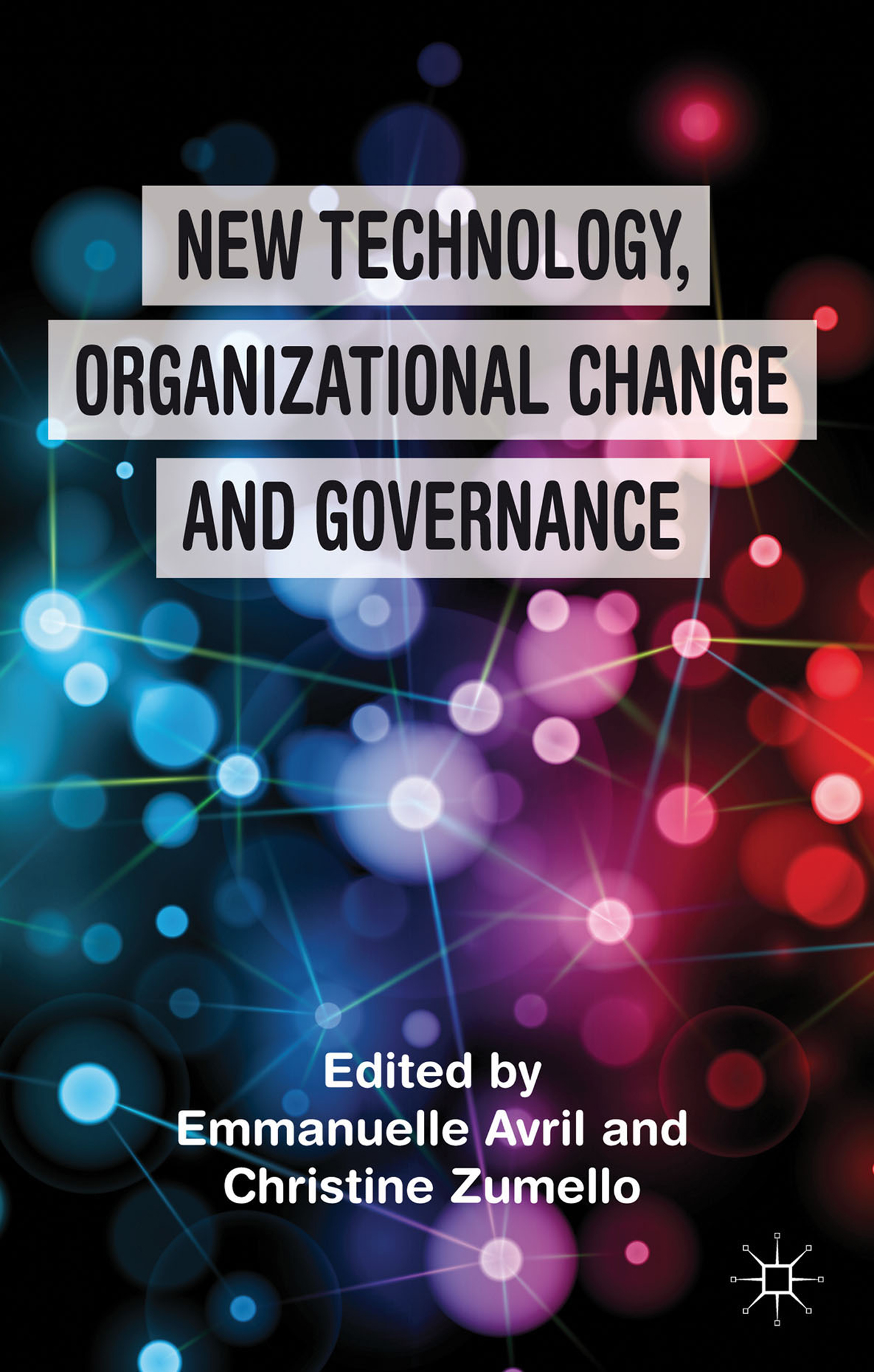
New technology, organizational change and governance / edited by Emmanuelle Avril, Professor of Contemporary British Politics and Society, Université Sorbonne Nouvelle, France, and Christine Zumello, Professor of Contemporary American Politics and Society, Université Sorbonne Nouvelle, France.
- Format:
- Book
- Language:
- English
- Subjects (All):
- Political participation--Computer network resources.
- Political participation.
- Political activists--Effect of technological innovations on.
- Political activists.
- Internet in public administration.
- Decentralization in government.
- Organizational change.
- Physical Description:
- xi, 242 pages : illustrations ; 23 cm
- Place of Publication:
- Basingstoke, Hampshire : Palgrave Macmillan, 2013.
- Summary:
- "The advent of globalisation and the continued development of new information technology has created an environment in which the one certainty for organisations is that they cannot cling to archaic, centralised and hierarchical models. The increased fluidity and speed of the global environment call for horizontal networked structures, where decisions are achieved through collaborative mechanisms, rather than pyramidal models. New processes have been emerging, in particular the practices of deliberative and participatory governance, with increased stakeholder and citizen inclusion and participation, greater use and reliance on networks of organisations, and efforts to resolve conflict through dialogue. New forms of organizations, networks, coalitions and partnerships, as well as the promises of open sourcing and the collaborative horizontal model point towards a new governance apparatus in which relationship-based patterns can project and protect a human dimension in this digital world. This book will prove invaluable to all those who are interested in participatory governance and organisational change"-- Provided by publisher.
- Contents:
- Machine generated contents note:
- List of Illustrations and tables
- List of contributors
- Note on Editors
- 1. Introduction: Towards Organizational Democracy? Convergence and Divergence in Models of Economic and Political Governance; Emmanuelle Avril and Christine Zumello
- PART I: NEW PATHS OF GOVERNANCE
- 2. Arts Council England in the 2000s: Towards Digital Era Governance?; Cecile Doustaly
- 3. London Transport/Transport for London: The Unstable Mix of Politics, Management and Public Service Values; Roseline Theron
- 4. Financial Institutions and Political Parties in the USA: the Myth of Direct Access; Christine Zumello
- 5. From Campaign Finance to Obamacare.The Supreme Court Dis-empowering Voters and Parties: the Law of Intended Consequences?; Vincent Michelot
- PART II: BREAKING ORGANIZATIONAL BOUNDARIES
- 6. New Challenges of Intra-party Democracy: Grassroots Activists, Instant Members and Cyber-militants; Susan Scarrow
- 7. From Grassroots to Netroots? The Evolution of Decision-Making in the British Labour Party; Emmanuelle Avril
- 8. The Scottish National Party and Organizational Democratisation; Nathalie Duclos
- 9. New Media, New Organizations, New Politics; James Morone
- 10. The Evolution of UK Parties in the Web 2.0 and Post-spin Era; Geraldine Castel
- PART III: EMERGING PATTERNS OF ORGANIZATIONAL DESIGN
- 11. The Rise of Machines, the Fall of Organizations; Regine Hollander
- 12. Centralizing and Decentralizing Effects of Internet Technologies within the Citizen Trade Campaign Network; Jean-Baptiste Velut
- 13. Towards Leaderless Organizations? The Impact of New Technology on Leadership and Learning; Toby Coop
- 14. Political Marketing and Governance: Moving Towards the Political Partnership Model of Organization; Jennifer Lees-Marshment
- 15. Concluding Remarks
- Index.
- Notes:
- Includes bibliographical references and index.
- ISBN:
- 9781137264220
- 1137264225
- OCLC:
- 820434219
- Online:
- Cover image
The Penn Libraries is committed to describing library materials using current, accurate, and responsible language. If you discover outdated or inaccurate language, please fill out this feedback form to report it and suggest alternative language.