1 option
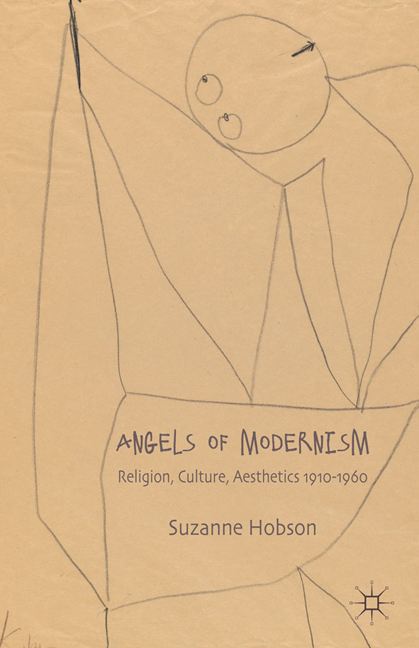
Angels of modernism : religion, culture, aesthetics 1910-1960 / Suzanne Hobson.
- Format:
- Book
- Author/Creator:
- Hobson, Suzanne.
- Language:
- English
- Subjects (All):
- Angels.
- Angels in popular culture.
- Angels in art.
- Angels in literature.
- Physical Description:
- x, 226 pages : illustrations ; 22 cm
- Place of Publication:
- Houndmills, Basingstoke, Hampshire, UK ; New York : Palgrave Macmillan, 2011.
- Summary:
- Angels of Modernism explores the many and various ways that angels are represented in modernist literary cultures. Seen by the likes of D. H. Lawrence, H. D. and Virginia Woolf as belonging to a religious or Victorian past, the angel might easily have been consigned to history along with other tropes considered too old-fashioned or sentimental for modern(ist) literary tastes. This book argues that it is precisely the angel's lack of fit with self-consciously modern attitudes to art and belief that explains its continued attraction to modernist writers as well as its capacity to generate new meanings. On the one hand, the angel appears as a symbol of resistance to secularizing tendencies in aesthetics and religion. On the other, it is a motile figure appropriated and transformed by a variety of interests from sex-reform campaigners to designers of new Utopias. From Walter Benjamin, through Djuna Barnes, H. D., D. H. Lawrence, Wyndham Lewis, Wallace Stevens and Virginia Woolf, angels continue to perform cultural and critical work even as they are identified as incongruous and untimely. Book jacket.
- Contents:
- Introduction: twentieth-century angelology
- 'On the side of the angels': historical angels and angels of history
- 'The angel club': the angel versus the Ubermensch
- 'Angels on all fours': the third sex and angels with 'a difference'
- 'The necessary angel of earth': World War II and the utopian imagination.
- Notes:
- Includes bibliographical references (pages 208-222) and index.
- ISBN:
- 9780230275393
- 0230275397
- OCLC:
- 729342536
- Online:
- Cover image
The Penn Libraries is committed to describing library materials using current, accurate, and responsible language. If you discover outdated or inaccurate language, please fill out this feedback form to report it and suggest alternative language.